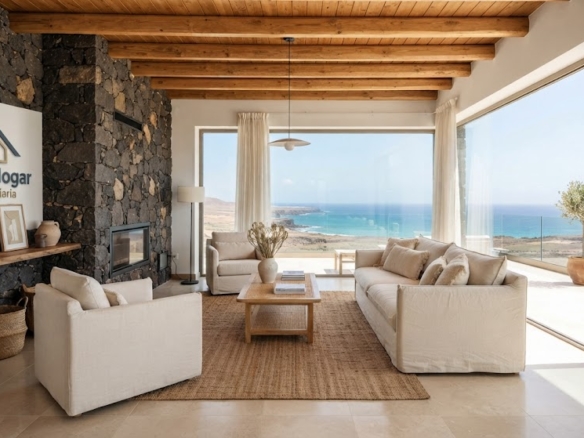
The allure of the Canary Islands is powerful, and the KaZa Hogar tagline says it all: “…visit our island… and start a new life!”. For many, the crowning achievement of this dream isn’t just buying an apartment, but designing and building a bespoke villa from scratch. Imagine a house designed to follow the light of the archipelago, with large open spaces, a private pool, and breathtaking views of the volcanic landscapes of Lajares, Villaverde, or the coasts of Adeje.
However, when it comes to buying land abroad, enthusiasm often gives way to fear of bureaucracy. “What can I actually build?”, “What are the environmental restrictions?”, “Do I risk buying an unusable plot?”.
The answer to these questions lies in correctly interpreting local urban planning laws. In the Canaries, land classification is strict but transparent, and it is governed by the Ley 4/2017, de 13 de julio, del Suelo y de los Espacios Naturales Protegidos de Canarias — the urban planning regulation currently in force in the archipelago. Let’s look together at how land is classified and how to navigate the process without mistakes.
The 3 Main Land Categories in the Canaries
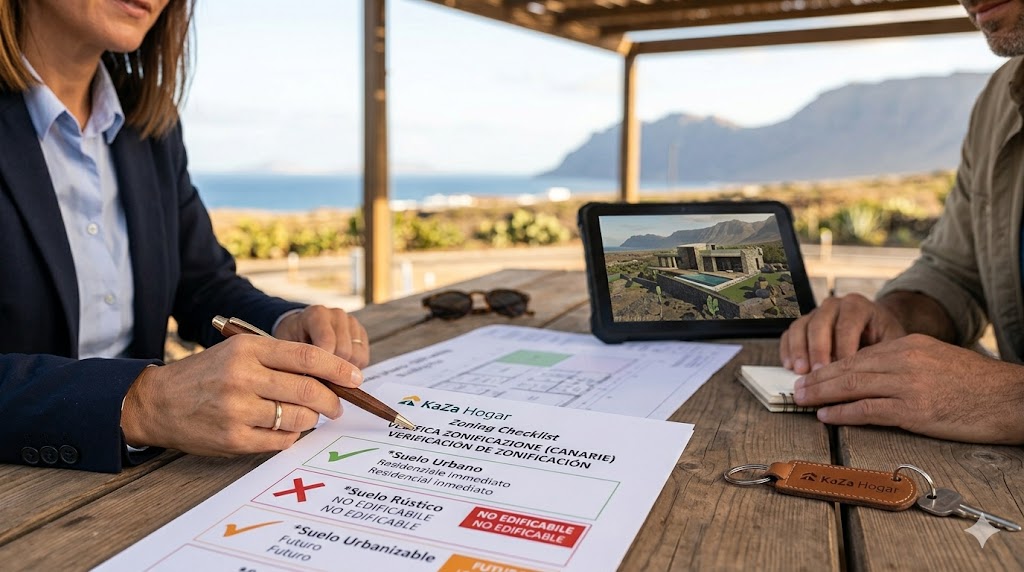 Before signing any contract or paying a deposit, it is essential to verify the designated use of the land in the Plan General de Ordenación (PGO) of the respective municipality (Ayuntamiento). Land is mainly divided into three macro-categories:
1. Suelo Urbano (Urban Land)
This is the safest category if your goal is to build a residential house. Suelo Urbano is land located in an area that already possesses basic infrastructure:
-
Connection to electricity and water grids
-
Paved road access and public lighting
-
Sewage system
However, the Ley 4/2017 distinguishes between two subcategories that make a big difference in practice:
Suelo Urbano Consolidado: This is the ideal scenario. The infrastructure is already fully completed and the plot is ready for building. You can apply for the building permit (Licencia de Obra) while respecting the volume, height, and distance parameters established by the municipality.
Suelo Urbano No Consolidado: Although this is still urban land, the owner must bear development charges and participate in the completion of urban infrastructure works before building can begin. Buying a suelo urbano no consolidado thinking you can build immediately is a common and costly mistake.
2. Suelo Urbanizable (Developable Land)
This category represents a middle ground. It is land designated by the zoning plan for future urban expansion, but where building is not yet possible.
The Ley 4/2017 abolished the old distinction between “sectorizado” and “no sectorizado,” introducing two new subcategories:
Suelo Urbanizable Ordenado: It already has an ordenación pormenorizada (an approved detailed plan). This is the most advanced type: the bureaucratic phases are more mature, even if physical infrastructure works still need to be carried out before construction.
Suelo Urbanizable No Ordenado: It does not yet have a detailed plan. It requires further administrative steps before infrastructure execution can begin. Timelines are longer and more uncertain.
⚠️ Warning: Many foreign buyers interpret “urbanizable” as “already buildable.” This is not the case. Until the urbanization works are completed and accepted by the Ayuntamiento, the land does not function as suelo urbano and does not allow for construction. Timelines can stretch for years or, in some cases, never materialize. It is an option for medium-to-long-term investors looking for a lower purchase price, but it requires a lot of patience and careful analysis.
Important note: If you are reviewing urban planning documentation from before 2017, you might find land classified as “urbanizable no sectorizado.” With the entry into force of the Ley 4/2017, these plots were automatically reclassified as suelo rústico común. Always check for the updated classification.
3. Suelo Rústico (Rustic / Protected Land)
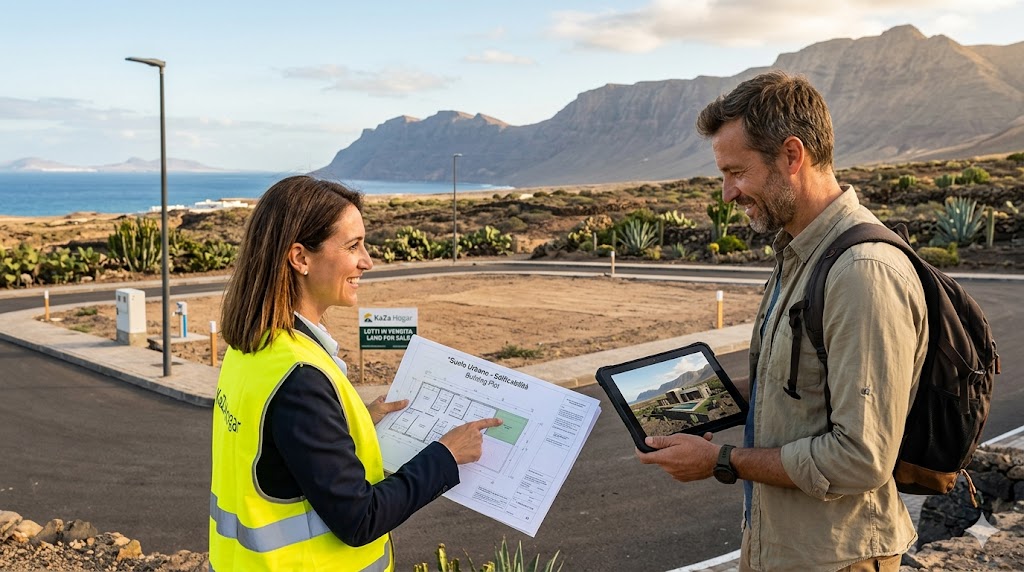 Suelo Rústico is rural or agricultural land. In the Canaries, a land of natural parks and biosphere reserves, this category enjoys very strict protections. However, it is not a uniform category: the Ley 4/2017 provides for different subcategories with very different regimes:
-
Suelo Rústico de Protección Ambiental: Maximum protection. Includes land with significant natural or cultural values.
-
Suelo Rústico de Protección Económica: Intended for agricultural, livestock, forestry, or extractive activities.
-
Suelo Rústico de Asentamiento Rural o Agrícola: Consolidated rural nuclei with very limited and specific building possibilities.
-
Suelo Rústico Común: The least restrictive subcategory, which replaces the old “urbanizables no sectorizados.” It serves as a land reserve for future needs.
What can you do on suelo rústico? The regulations provide for different types of uses, each with its own procedure:
-
Usos ordinarios: Agricultural, livestock, and similar activities, generally permitted.
-
Usos de interés público o social: Activities that must necessarily be located on rustic land (certain services, infrastructure), subject to a specific procedure.
-
Usos autorizables: Require the Calificación Territorial issued by the Cabildo Insular, including some forms of rural tourism or residential projects tied to agricultural activities.
Buying rustic land thinking you can easily build a modern villa there is one of the most serious and expensive mistakes a foreign buyer can make.
The KaZa Hogar Checklist: Documents to Request Before Buying
To proceed with total peace of mind, there are official documents that must never be missing during the analysis phase of a plot of land:
A) The Cédula Urbanística (or Informe Urbanístico): This is a certificate issued by the technical office of the Ayuntamiento. It states in black and white the exact and updated classification of the plot, the minimum area required to build, the maximum allowed height, and the building density (how many square meters of house you can build relative to the size of the land).
B) The Nota Simple: Issued by the Registro de la Propiedad (Land Registry), it is used to verify who the real owner of the land is and whether it is subject to mortgages, debts, rights-of-way, or liens.
C) Informe de Afecciones: Checks for the possible presence of restrictions external to the urban plan: road easements, watercourses (barrancos), public water domain, protected spaces, or high-voltage power lines. This is a document often overlooked by foreign buyers, but it is fundamental.
Building in the Canaries: The Value of a Local Partner
 Navigating between municipal regulations (Ayuntamiento) and the island’s landscape protection directives (Cabildo) requires deep knowledge of the area. The rules that apply to a plot in Corralejo could differ radically from those applied in Lajares or in the south of Tenerife.
At KaZa Hogar Inmobiliaria, we don’t just show you a catalog of listings. We select only plots of land with clear and updated urban planning documentation, and we support you step by step, putting you in touch with local architects, surveyors, and trusted builders who speak your language. Our goal is to turn the construction process into an exciting and stress-free experience.
Do you want to build your bespoke villa in the archipelago? Take a look at our exclusive selection of buildable plots or contact us today for a personalized urban planning consultation with our experts.